
Vitamin D Deficiency in Pakistan: Symptoms, Causes, Tests and Treatment
Pakistan's National Nutrition Survey found vitamin D deficiency in nearly 8 out of 10 women and 6 out of 10 young children. Here are the symptoms, why it is so common in such a sunny country, what your test result means, and how it is treated safely.
By Apotex Healthcare team Updated 6 min read

Vitamin D deficiency is one of the most common health problems in Pakistan. The 2018 National Nutrition Survey found it in 79.7% of women aged 15 to 49 and 62.7% of children under five. It often causes no clear symptoms, so the only way to know is a blood test called 25-hydroxy vitamin D. Treatment is simple and inexpensive, but high-dose courses should be guided by a doctor.
How common is vitamin D deficiency in Pakistan?
The National Nutrition Survey 2018, run by the Government of Pakistan with UNICEF and Aga Khan University, tested blood samples from across the country. It counted anyone below 20 ng/mL as deficient and below 8 ng/mL as severely deficient.
| Group | Deficient (below 20 ng/mL) | Severely deficient (below 8 ng/mL) |
|---|---|---|
| Women aged 15–49 | 79.7% | 25.7% |
| Children aged 6–59 months | 62.7% | 13.2% |
Deficiency was more common among women in cities (83.6%) than in villages (77.1%). In other words, low vitamin D is the norm in Pakistan, not the exception.
Why is it so common in such a sunny country?
Your skin makes vitamin D when the sun's UVB rays reach it. Several things get in the way in Pakistan:
- Time indoors. Offices, classrooms, homes and cars keep most of us out of the midday sun, and glass blocks the UVB that skin needs.
- Covered skin. Clothing that covers the arms and legs, and a dupatta or scarf, leaves little skin in the sun.
- Darker skin. Melanin protects the skin, but it also means darker skin needs more sun to make the same amount of vitamin D, according to the US National Institutes of Health (NIH).
- Smog. The NIH lists smog among the factors that reduce the UV light reaching the skin, and winter smog in Lahore and other cities is heavy.
- Food. Few foods contain much vitamin D. The best sources are oily fish, egg yolks, liver and mushrooms that have been exposed to UV light, and few everyday Pakistani staples are fortified with it.
Symptoms of vitamin D deficiency
Most people with low vitamin D feel nothing specific, which is why it goes unnoticed for years. When deficiency is severe and long-lasting, it softens the bones:
- In adults this is called osteomalacia. It causes aching bones, especially in the back, hips and legs, and muscle weakness, such as difficulty climbing stairs or getting up from the floor.
- In children it causes rickets: soft, weak bones, bowed legs, delayed growth and late walking.
Tiredness, body aches, low mood and hair fall are often blamed on low vitamin D. They can be linked, but they have many other causes too, such as anaemia, thyroid problems or poor sleep. Test instead of guessing.
See a doctor promptly for bone pain that does not settle, muscle weakness, a child with bowed legs or slow growth, or any fracture after a minor fall.
What your vitamin D test result means
The test measures 25-hydroxy vitamin D in your blood. Results are given in ng/mL or nmol/L (1 ng/mL equals 2.5 nmol/L). The NIH uses these levels:
| Result | What it means |
|---|---|
| Below 12 ng/mL (30 nmol/L) | Deficient: risk of rickets in children and osteomalacia in adults |
| 12–20 ng/mL (30–50 nmol/L) | Possibly too low for bone health in some people |
| 20 ng/mL (50 nmol/L) and above | Enough for bone health in most people |
| Above 50 ng/mL (125 nmol/L) | Higher than needed, and possibly harmful |
Many labs in Pakistan print different ranges, often calling anything below 20 ng/mL deficient and 20–29 ng/mL insufficient. Ask your doctor what your number means for you.
How vitamin D deficiency is treated
A high-dose course first. When a test confirms deficiency, doctors usually prescribe a higher dose for a set number of weeks, taken daily or once a week, and then switch to a lower dose to keep your level up. The dose depends on your result, your weight and your health, so follow your doctor's plan rather than a friend's.
Be careful with large single doses. Very large doses by injection or drops are widely used in Pakistan. They have a place, but repeating them without checking your level can push vitamin D too high. Your doctor may recheck your level after about three months.
Then keep it up. The NIH's daily recommended amounts, from food, sun and supplements together, are:
| Age | Recommended daily amount | Upper limit without medical supervision |
|---|---|---|
| 0–12 months | 400 IU (10 mcg) | 1,000–1,500 IU |
| 1–70 years | 600 IU (15 mcg) | 2,500–3,000 IU for ages 1–8; 4,000 IU from age 9 |
| Over 70 years | 800 IU (20 mcg) | 4,000 IU |
Doctors often advise more than the daily recommendation for people who have been deficient, because it takes more to bring a low level up than to keep a normal one steady.
Take it with food. Vitamin D dissolves in fat, so take it with a meal that contains some oil, ghee, eggs or dairy. Magnesium also helps the body use vitamin D; our magnesium guide explains why.
Can you fix it with sunlight?
Sunlight helps, especially in summer. The NIH notes that some researchers suggest 5 to 30 minutes of sun between 10 am and 4 pm, daily or at least twice a week, on the face, arms and legs without sunscreen. Darker skin needs the longer end of that range.
In practice, many people in Pakistan cannot get that much sun on bare skin every week, and strong sun also causes tanning and dark spots. Short, regular sun exposure plus a supplement is a realistic plan for most people. Sunblock on the face still makes sense: our sunblock guide explains why it does not usually leave you short of vitamin D.
Too much vitamin D: the risk of overdoing it
Vitamin D is stored in the body, so very high doses taken for too long can build up. According to the NIH, too much raises the calcium in your blood. That can cause nausea, vomiting, muscle weakness, confusion, loss of appetite, thirst, passing a lot of urine and kidney stones. This almost always comes from supplements, not from the sun.
- Add up the vitamin D in every product you take, including multivitamins, calcium tablets and combination products.
- Do not take high-strength products (5,000 IU and above) every day for months without a doctor's advice and a blood test.
- Tell your doctor about any vitamin D injections or drops you have had recently.
Who should get tested
- Women who are pregnant, planning a pregnancy or breastfeeding
- Older adults, and anyone who rarely goes outside
- People with bone pain, muscle weakness, osteoporosis or a fracture after a minor fall
- People with obesity, kidney or liver disease, or conditions that affect how fat is absorbed
- Anyone taking long-term steroid tablets
- Breastfed babies: ask your child's doctor about vitamin D drops
How to choose a vitamin D supplement in Pakistan
- Vitamin D3 (cholecalciferol). The NIH notes that D3 usually raises blood levels more, and for longer, than D2.
- The strength fits the plan. Low daily doses (1,000–2,000 IU) are for keeping levels up; 5,000 IU, 10,000 IU and larger doses are for courses or weekly use on a doctor's advice.
- Clear labelling. The dose per tablet in IU or mcg, the maker's name, a batch number and an expiry date, in a sealed pack.
- Useful partners. Vitamin K2 and magnesium are sensible companions for bone health. Our vitamin D3 and K2 guide explains why.
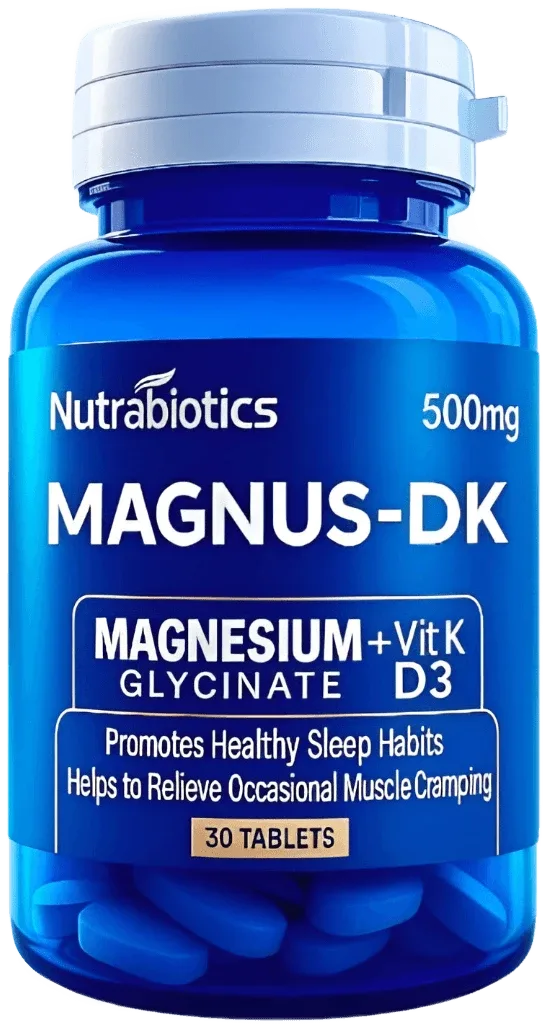
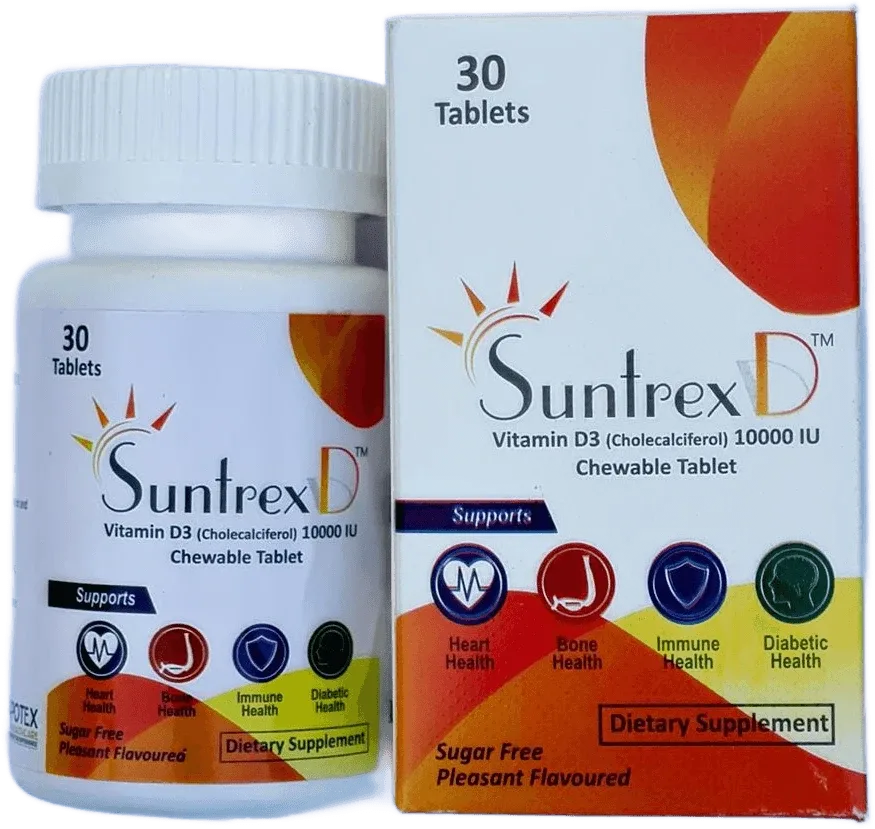
Apotex options. SuntrexD is a 10,000 IU vitamin D3 chewable tablet, usually taken weekly or as a short course on a doctor's advice. Magnus-DK combines 5,000 IU of vitamin D3 with 100 mcg of vitamin K2 and 500 mg of magnesium glycinate in one tablet. Because both are high-strength, they suit a course your doctor has agreed, not years of unchecked daily use.
Products in this guide
Cash on delivery across Pakistan, with free delivery on orders over Rs 2,000.
Common questions
What are the first signs of vitamin D deficiency?
Often there are none. When deficiency is severe and long-lasting, adults may notice aching bones and muscle weakness, and children may have soft bones, bowed legs or slow growth. A 25-hydroxy vitamin D blood test is the only reliable way to know.
What is a normal vitamin D level?
The NIH considers 20 ng/mL (50 nmol/L) and above enough for bone health in most people, and below 12 ng/mL deficient. Many Pakistani labs call below 20 ng/mL deficient and 20–29 ng/mL insufficient. Levels above 50 ng/mL are higher than needed.
How long does it take to recover from vitamin D deficiency?
Blood levels start rising within weeks of treatment, and doctors often recheck after about three months. Bone and muscle symptoms can take longer to settle.
Can I get enough vitamin D from the sun in Pakistan?
It is possible in summer with regular sun on bare arms and legs, but time indoors, covered clothing, darker skin and winter smog mean many people do not. Most people need a supplement as well.
Is 50,000 IU of vitamin D safe?
It is a common doctor-prescribed weekly dose for a limited course to correct a deficiency. It is not a daily dose, and it should not be repeated for months without a blood test.
Can vitamin D deficiency cause hair fall?
Low vitamin D has been linked with some types of hair loss in studies, but it is not proven to cause it. Iron deficiency, thyroid problems, hormonal changes and stress are common causes too, so see a doctor and get tested.
More guides
-
 5 min read
Glutathione for Skin: Benefits, Side Effects and What the Research Really Shows
Glutathione is the antioxidant behind most "whitening" tablets in Pakistan. Here is what the studies actually show, how long it takes, the side effects, why injections are a bad idea, and how to choose capsules safely.
-
 4 min read
Vitamin C Serum: Benefits, How to Use It and How to Choose a Good One
Vitamin C serum is one of the best-studied ingredients for brighter, more even skin. Here is what it can and cannot do, how to use it morning and night, and how to choose one that has not already gone off.
-
 4 min read
Best Sunblock for Pakistan's Sun: SPF, PA and How to Use It Properly
In Pakistan's sun, a good sunblock does more against tanning, dark spots and early wrinkles than any cream. Here is what SPF and PA mean, how to choose one for your skin, and how much to apply.