
Vitamin C Serum: Benefits, How to Use It and How to Choose a Good One
Vitamin C serum is one of the best-studied ingredients for brighter, more even skin. Here is what it can and cannot do, how to use it morning and night, and how to choose one that has not already gone off.
By Apotex Healthcare team Updated 4 min read
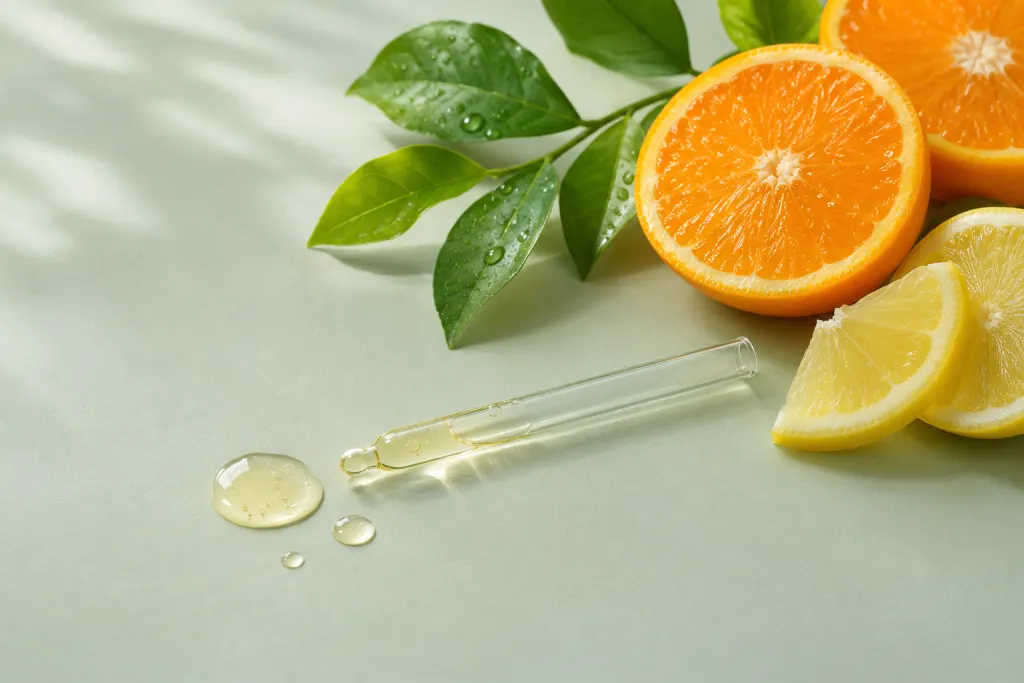
A vitamin C serum is an antioxidant you apply in the morning, under sunblock. Used every day for a few months, it can help skin look brighter and more even, fade some dark spots a little and soften fine lines. It is not a sunblock, and the type, strength and freshness of the vitamin C decide how well it works.
What does vitamin C do for skin?
- Antioxidant protection. Sun and pollution create free radicals that damage skin. Vitamin C helps neutralise them, and the Linus Pauling Institute notes that vitamin C combined with vitamin E protects against sun damage better than either alone.
- Collagen support. Skin needs vitamin C to make collagen, the protein that keeps it firm. In human studies, topical vitamin C used for at least 12 weeks reduced wrinkling and increased collagen, although not in everyone.
- Brightening. Vitamin C can slow melanin production, which is why it may have a mild lightening effect on dark spots and uneven tone.
Vitamin C does not absorb UV light, so it is not a sunscreen. Always use a sunblock on top of it in the daytime.
What to expect, and how soon
| Concern | What vitamin C can do | Give it |
|---|---|---|
| Dull, tired-looking skin | Often the first change people notice | A few weeks |
| Dark spots and marks after pimples | Gradual, mild fading, much better with daily sunblock | 2–3 months |
| Fine lines | A small improvement in some people | 3 months or more |
| Melasma (chhaiyan) | Can help as part of a routine, but rarely enough on its own | Months; see a dermatologist |
Types of vitamin C in serums
L-ascorbic acid is the pure form and the best studied. It gets into the skin best in an acidic formula (below pH 4), and studies found absorption peaked at about 20%, so stronger is not better. It is also the least stable form: air, heat and light break it down.
Vitamin C derivatives such as sodium ascorbyl phosphate, magnesium ascorbyl phosphate, ascorbyl glucoside and tetrahexyldecyl ascorbate are more stable and usually gentler on sensitive skin. They are less well researched, and some get into the skin less easily.
Helpful partners include vitamin E and ferulic acid, which help stabilise vitamin C and boost its protection, and hyaluronic acid, which holds water in the skin so it feels smoother and plumper.
How to use vitamin C serum
In the morning:
- Wash your face and pat it dry.
- Apply 3–4 drops to your face and neck and pat them in gently.
- Wait a minute, then apply moisturiser if you use one.
- Finish with a broad-spectrum sunblock of SPF 30 or higher.
At night you can use it again if your skin is comfortable. If you use a retinoid or an exfoliating acid at night, keep vitamin C for the morning to avoid irritation.
First time? Try it on a small patch along your jaw for a few days. Mild tingling for a minute is normal; stop if you get lasting redness, burning or itching.
Mistakes that waste a vitamin C serum
- Skipping sunblock. Sun darkens spots faster than any serum can fade them.
- Using it after it has gone off. Pure vitamin C serums turn yellow and then orange-brown as they oxidise. A serum that has turned dark has lost much of its strength.
- Storing it in the heat. Keep the cap closed, out of direct sun and away from hot bathrooms and cars, especially in a Pakistani summer.
- Using too many strong products at once. Vitamin C, exfoliating acids and retinoids together can irritate the skin. Introduce one at a time.
- Giving up too soon. Judge the results after two to three months of daily use.
Who should be careful
- Sensitive skin, rosacea or eczema. The acidity of pure vitamin C can sting. Try a derivative or a lower strength, and patch test first.
- Acne treatments. Benzoyl peroxide can oxidise vitamin C, so use them at different times of day.
- Pregnancy. Topical vitamin C is widely used in pregnancy, but ask your doctor about any skincare you are unsure of.
How to choose a vitamin C serum in Pakistan
- The type of vitamin C is named, ideally with its strength.
- The bottle protects it: dark or opaque glass, a dropper or an airless pump.
- It looks fresh: clear to pale straw-coloured when new, not orange or brown.
- Batch number and expiry date on a sealed pack.
- Useful extras such as hyaluronic acid, vitamin E or ferulic acid.
Where Reversa-C fits. Reversa-C from Apotex Healthcare combines vitamin C with hyaluronic acid for brighter, smoother-looking skin. Apply a few drops after cleansing, once or twice a day, and follow with a sunblock such as APO-MAX in the morning. Our skin lightening guide shows where it fits in a full routine for dark spots.
Products in this guide
Cash on delivery across Pakistan, with free delivery on orders over Rs 2,000.
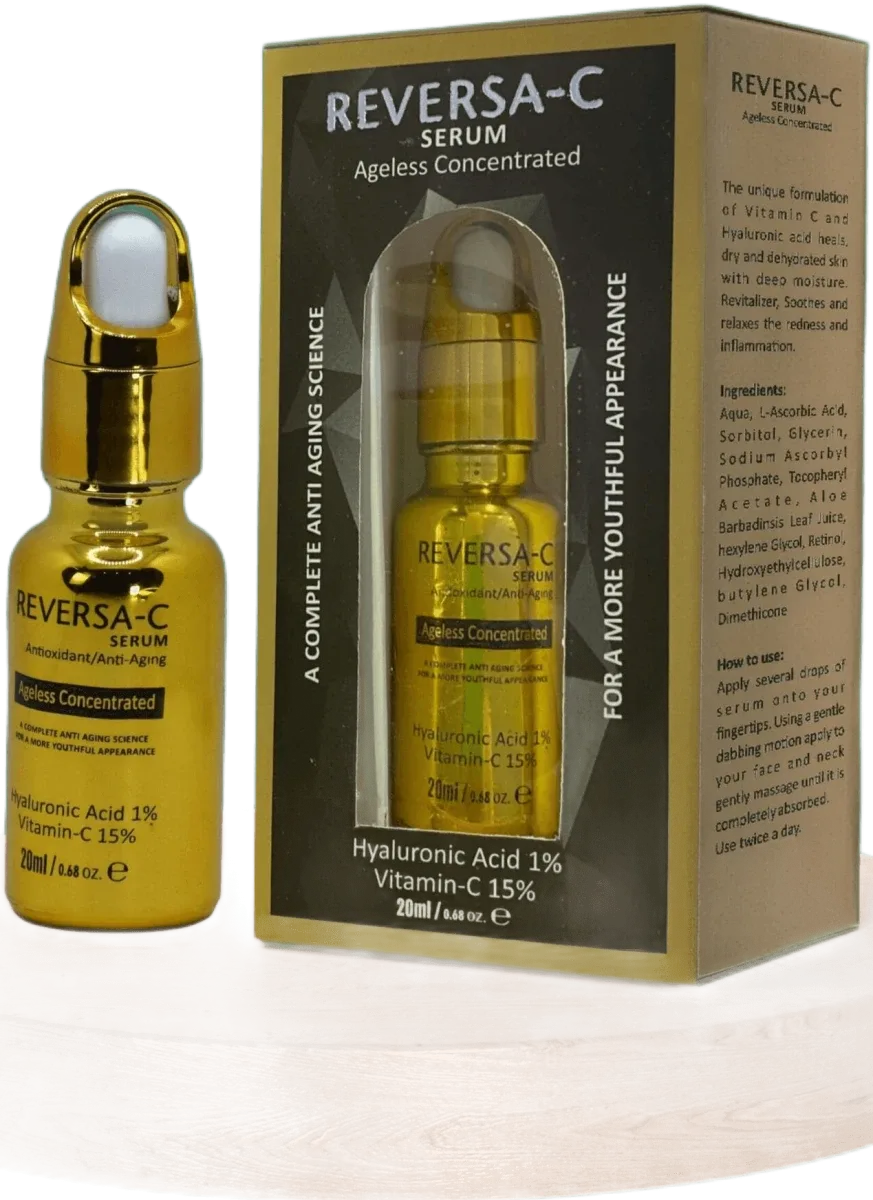
Reversa-C Serum Vitamin C and hyaluronic acid serum for brighter, smoother-looking skin.
Rs 2,295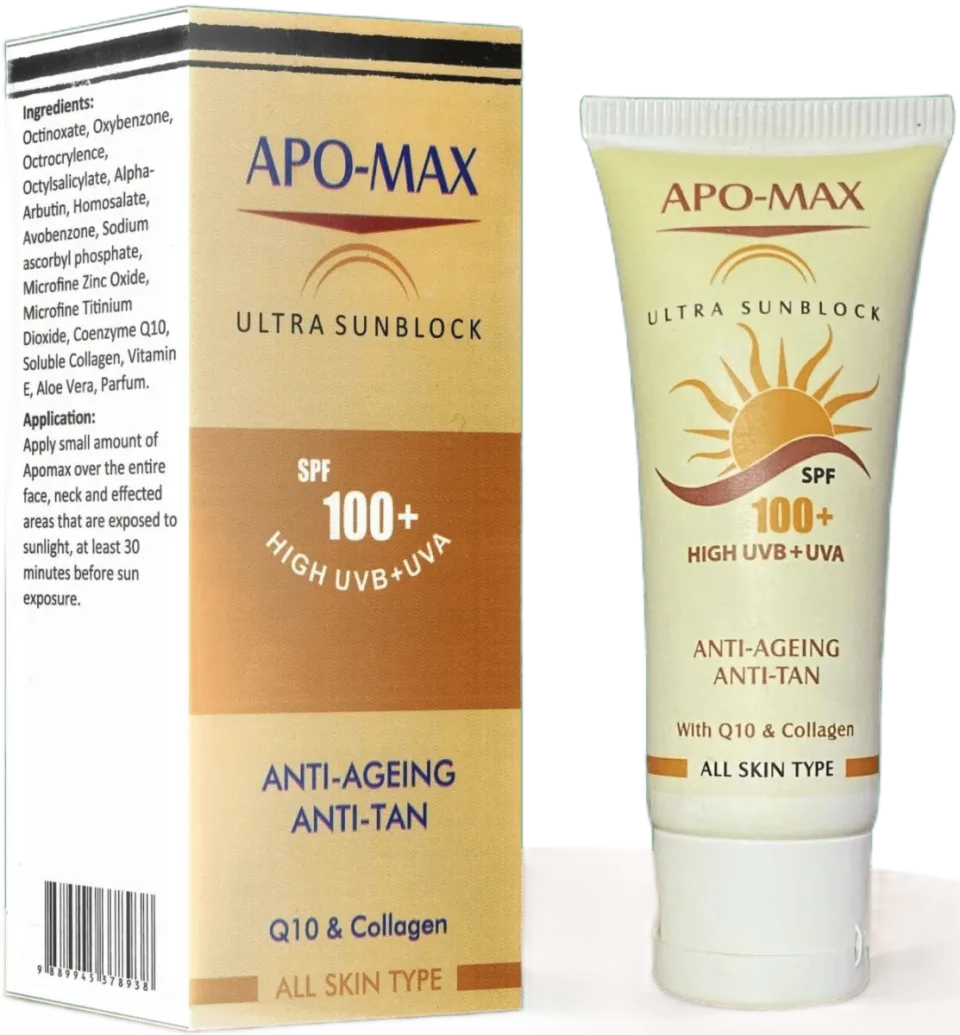
100+ SPF UV protection
APO-MAX Ultra Sunblock
Rs 995 (6)
Common questions
Can I use vitamin C serum every day?
Yes. Once a day in the morning is enough for most people, and you can use it twice a day if your skin is comfortable.
Is vitamin C serum better in the morning or at night?
The morning is best, under sunblock, because its antioxidant protection helps against the day's sun and pollution. Using it at night as well is fine if your skin tolerates it.
Can I use vitamin C serum with niacinamide?
Yes, for most people. The old warning came from lab tests of pure ingredients at high heat, not from modern skincare. If your skin goes red, use them at different times of day.
Does vitamin C serum lighten skin?
It can make skin look brighter and fade some dark spots a little over a few months, especially with daily sunblock. It does not change your natural skin colour.
Why has my vitamin C serum turned orange?
It has oxidised from air, heat or light. A slightly darker shade is common, but a serum that has turned dark orange or brown has lost much of its strength and is best replaced.
How long does a vitamin C serum last after opening?
Check the small open-jar symbol on the pack, such as "3M" or "6M", which shows how many months it lasts once opened. Keep the cap closed and store it somewhere cool and dark.
More guides
-
 6 min read
Vitamin D Deficiency in Pakistan: Symptoms, Causes, Tests and Treatment
Pakistan's National Nutrition Survey found vitamin D deficiency in nearly 8 out of 10 women and 6 out of 10 young children. Here are the symptoms, why it is so common in such a sunny country, what your test result means, and how it is treated safely.
-
 5 min read
Glutathione for Skin: Benefits, Side Effects and What the Research Really Shows
Glutathione is the antioxidant behind most "whitening" tablets in Pakistan. Here is what the studies actually show, how long it takes, the side effects, why injections are a bad idea, and how to choose capsules safely.
-
 4 min read
Best Sunblock for Pakistan's Sun: SPF, PA and How to Use It Properly
In Pakistan's sun, a good sunblock does more against tanning, dark spots and early wrinkles than any cream. Here is what SPF and PA mean, how to choose one for your skin, and how much to apply.