
Best Sunblock for Pakistan's Sun: SPF, PA and How to Use It Properly
In Pakistan's sun, a good sunblock does more against tanning, dark spots and early wrinkles than any cream. Here is what SPF and PA mean, how to choose one for your skin, and how much to apply.
By Apotex Healthcare team Updated 4 min read
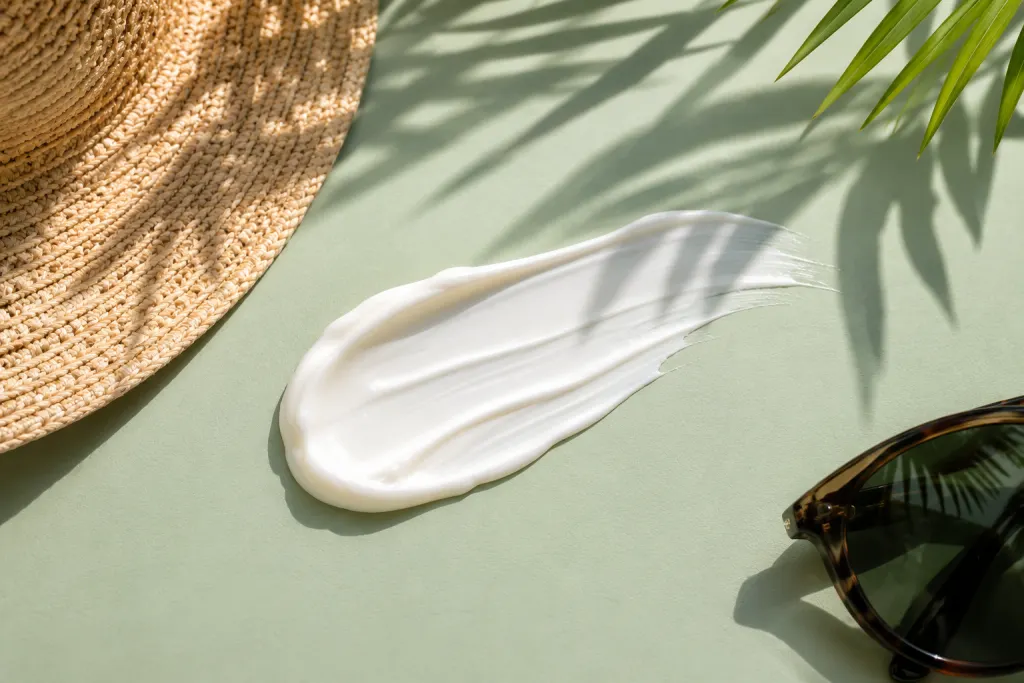
The best sunblock is a broad-spectrum SPF 30 or higher with strong UVA protection, in a texture you are happy to wear every day. Apply plenty, 15 minutes before going out, and reapply every two hours outdoors. In Pakistan's strong sun, daily sunblock is one of the most effective things you can do against tanning, dark spots and early wrinkles.
Why sunblock matters so much in Pakistan
Pakistan gets intense sun for much of the year, and summer UV levels across most of the country are very high. Sunlight contains two kinds of UV that harm skin:
- UVB causes sunburn and tanning.
- UVA goes deeper, ages the skin and darkens pigment. The American Academy of Dermatology (AAD) notes that UVA passes through window glass, and that up to 80% of UV rays get through clouds.
Darker skin burns less easily, but it tans and develops dark spots and melasma more easily. The AAD also notes that visible light can worsen pigmentation, particularly in darker skin tones.
SPF and PA explained
SPF measures protection against UVB. The AAD says SPF 30 blocks 97% of UVB rays; higher numbers block slightly more, and none blocks 100%.
| SPF | UVB filtered in lab tests (about) |
|---|---|
| 15 | 93% |
| 30 | 97% |
| 50 | 98% |
| 100 | 99% |
A higher SPF does not last longer: the AAD notes that high-SPF sunscreens need reapplying just as often. Most people apply far less than the amount used in testing, so a high SPF gives a useful margin, but only if you also apply enough.
PA is a rating for UVA protection used on many Asian sunscreens, from PA+ to PA++++ (the highest). On other sunscreens, look for the words "broad spectrum", which means it protects against both UVA and UVB.
Mineral or chemical sunblock?
Mineral (physical) sunblocks use zinc oxide, titanium dioxide or both. The AAD recommends them for sensitive skin. Some leave a white cast on darker skin; tinted versions avoid this.
Chemical sunblocks use other UV filters. They are usually lighter and leave no white cast, which many people with oily or darker skin prefer. Both types work when applied properly.
Choosing a sunblock for your skin
| Your skin | Look for |
|---|---|
| Oily or acne-prone | Gel, fluid or "matte" textures labelled non-comedogenic or oil-free |
| Dry | Cream or lotion with moisturising ingredients |
| Sensitive | Mineral (zinc oxide or titanium dioxide), fragrance-free |
| Dark spots or melasma | High SPF with PA++++ or broad spectrum; tinted sunblocks with iron oxides add protection from visible light |
| Darker skin that shows a white cast | Tinted mineral or a light chemical sunblock |
How much sunblock to apply
- Face: the AAD's guide is enough to cover the length of your index and middle fingers. Do not forget your ears, neck and hairline.
- Body: about 1 ounce for an adult, roughly enough to fill a shot glass, for all exposed skin.
- Timing: apply about 15 minutes before going out, so it has time to set.
A thin layer gives a fraction of the SPF on the bottle, which is why so many people tan "even with sunblock".
When to reapply
- Every two hours when you are outdoors, according to the AAD.
- Straight after sweating, swimming or towelling off.
- After washing your face, including after wudu.
- Over makeup, a sunscreen stick, powder or spray makes top-ups easier.
Common sunblock mistakes
- Skipping it on cloudy days or in winter.
- Skipping it indoors near windows or when driving: UVA passes through glass.
- Relying on the SPF in foundation or BB cream. You would need far more makeup than anyone wears to get the SPF on the label.
- Using an expired or overheated tube. Check the expiry date and do not leave sunblock in a hot car.
- Expecting sunblock to do it all. Shade, a wide-brimmed hat and sunglasses add a lot of protection, especially between late morning and late afternoon.
Sunblock and your skin routine
Sunblock is the last step of your morning routine, after any serum and moisturiser. A vitamin C serum underneath adds antioxidant protection. If you are treating dark spots with a lightening cream or taking glutathione, daily sunblock is what stops the spots coming back.
Where APO-MAX fits. APO-MAX Ultra Sunblock from Apotex Healthcare is an SPF 100+ sunblock with a light, non-greasy feel for everyday wear. Apply it generously 15 minutes before going out, and reapply every two hours outdoors and after sweating or washing your face.
Products in this guide
Cash on delivery across Pakistan, with free delivery on orders over Rs 2,000.
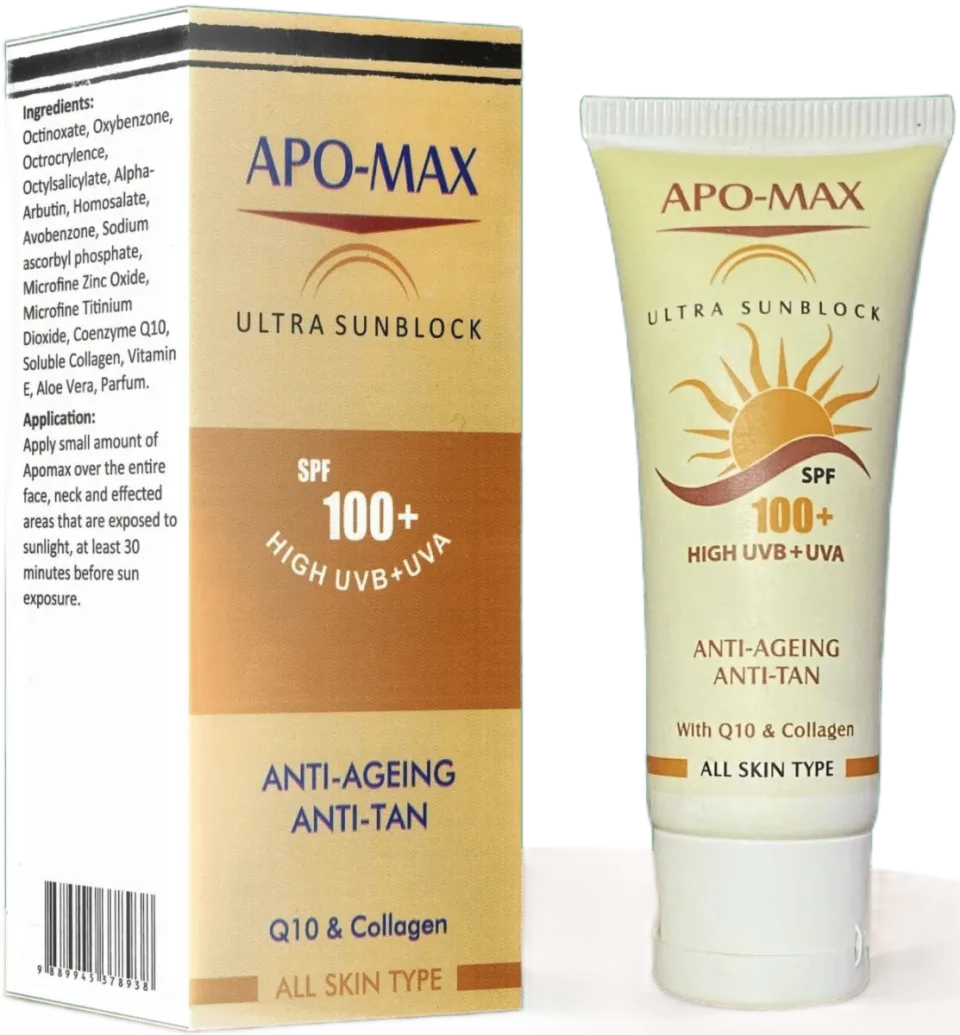
100+ SPF UV protection
APO-MAX Ultra Sunblock
Rs 995 (6)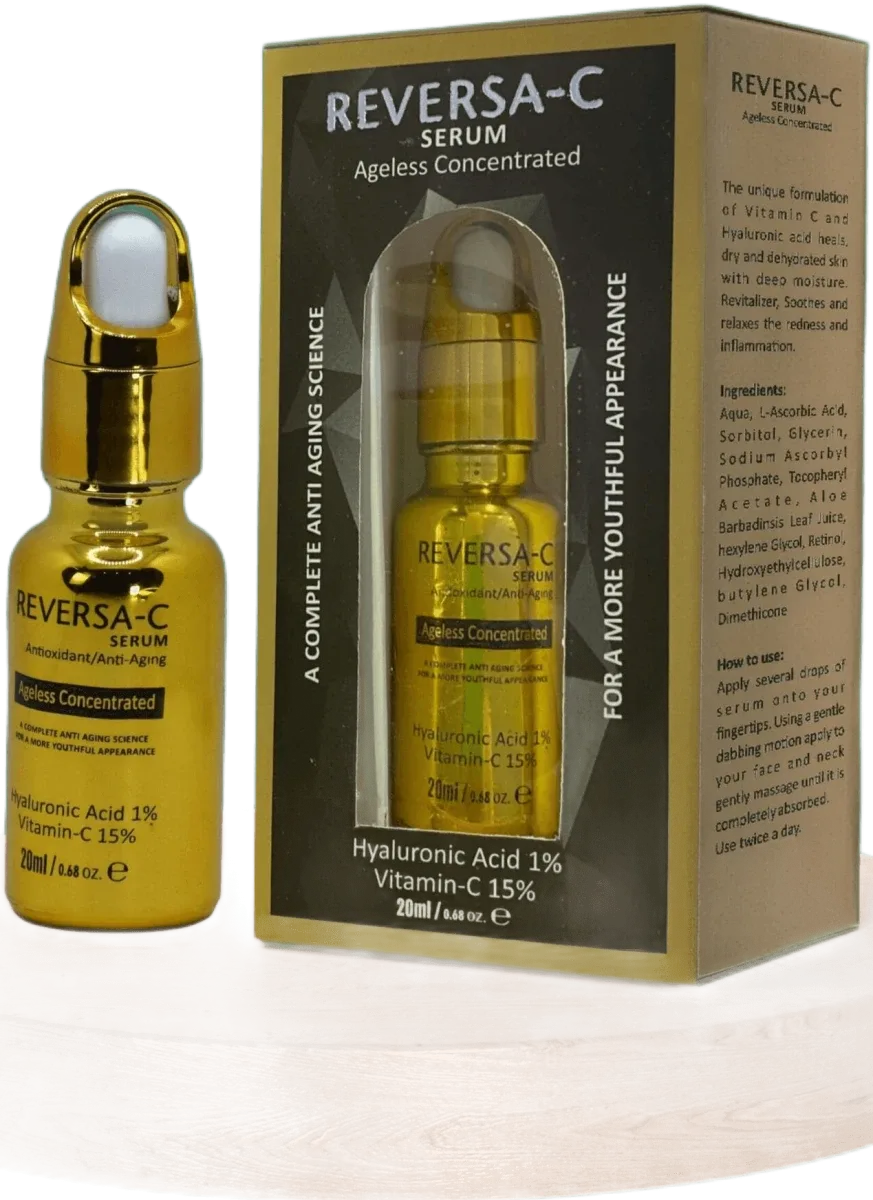
Reversa-C Serum Vitamin C and hyaluronic acid serum for brighter, smoother-looking skin.
Rs 2,295
Common questions
Which SPF is best for Pakistan?
Use at least SPF 30 with broad-spectrum or PA+++ protection every day. SPF 50 or higher is sensible for long hours outdoors, very sensitive skin, melasma or dark spots.
Do I need sunblock indoors?
If you sit near windows or travel by car in the daytime, yes. UVA passes through glass and contributes to tanning, dark spots and skin ageing.
Is SPF 100 better than SPF 50?
It filters slightly more UVB in lab tests, about 99% compared with 98%. How much you apply and how often you reapply make a bigger difference than the number.
Can sunblock cause pimples?
Heavy, oily formulas can on acne-prone skin. Choose a gel or fluid sunblock labelled non-comedogenic or oil-free, and wash your face properly at night.
Does sunblock cause vitamin D deficiency?
Not usually. The NIH notes that people rarely apply enough sunscreen, cover all their skin or reapply it often enough to stop vitamin D being made. Our vitamin D deficiency guide explains how to keep your levels healthy.
Can I use sunblock every day?
Yes. Daily sunblock is safe and recommended by dermatologists. Wash it off at night with your usual face wash.
More guides
-
 6 min read
Vitamin D Deficiency in Pakistan: Symptoms, Causes, Tests and Treatment
Pakistan's National Nutrition Survey found vitamin D deficiency in nearly 8 out of 10 women and 6 out of 10 young children. Here are the symptoms, why it is so common in such a sunny country, what your test result means, and how it is treated safely.
-
 5 min read
Glutathione for Skin: Benefits, Side Effects and What the Research Really Shows
Glutathione is the antioxidant behind most "whitening" tablets in Pakistan. Here is what the studies actually show, how long it takes, the side effects, why injections are a bad idea, and how to choose capsules safely.
-
 4 min read
Vitamin C Serum: Benefits, How to Use It and How to Choose a Good One
Vitamin C serum is one of the best-studied ingredients for brighter, more even skin. Here is what it can and cannot do, how to use it morning and night, and how to choose one that has not already gone off.