
Vitamin D3 and K2: Why They Are Taken Together, and How Much Is Safe
Low vitamin D is common in Pakistan, even with all our sunshine. Here is what vitamins D3 and K2 do, why they are taken together, how much is safe, and who should speak to a doctor first.
By Apotex Healthcare team Updated 4 min read

Vitamin D3 helps your body absorb calcium; vitamin K2 helps put that calcium where it belongs, in your bones. That is why the two are often taken together. Below: why so many people in Pakistan run low on vitamin D, how much is safe, and who should check with a doctor first.
Why vitamin D is often low in Pakistan
Your skin makes vitamin D from sunlight, so a sunny country should have plenty. In practice, studies in Pakistan have repeatedly found low vitamin D levels in a large share of adults and children. Common reasons:
- Spending most of the day indoors, at home, at work or in school
- Covering most of the skin when outside
- Darker skin, which needs more sun to make the same amount of vitamin D
- Smog and air pollution, which filter sunlight
- Few everyday foods that are naturally rich in vitamin D
Tiredness and aches in the bones or muscles can be signs, but many people with low levels feel nothing at all. A blood test called 25-hydroxy vitamin D is the only way to know your level.
What vitamin D3 does
Vitamin D helps your gut absorb calcium and keeps calcium and phosphate at the right levels for strong bones and teeth. It also plays a part in muscle function and the immune system.
Supplements contain either vitamin D2 or D3. The NIH notes that D3 raises blood levels of vitamin D more, and keeps them higher for longer, than D2.
What vitamin K2 does
Vitamin K helps make proteins your body needs for blood clotting and for healthy bones. K2 (menaquinones such as MK-7) is the form found in fermented foods and some animal foods. It activates proteins that help bind calcium into bone. Research on whether K2 supplements protect bones and arteries is still developing, but this is why it is so often paired with vitamin D.
Why take D3 and K2 together?
Vitamin D raises how much calcium you absorb, and vitamin K2 helps the proteins that build that calcium into bone. Taking both is a simple way to support each step. Magnesium is a useful third partner: the body uses it in processing vitamin D, and many diets are low in it too. Our magnesium glycinate guide covers that side.
How much vitamin D3 is safe?
| NIH guidance for adults | Per day |
|---|---|
| Recommended amount, ages 19–70 | 600 IU (15 mcg) |
| Recommended amount, over 70 | 800 IU (20 mcg) |
| Upper limit without medical supervision | 4,000 IU (100 mcg) |
To correct a deficiency, doctors often use higher doses for a while, such as 5,000 IU a day or a larger weekly dose, and then recheck your blood level. Doses above 4,000 IU a day are best taken on a doctor's advice, ideally after a blood test, and not together with other vitamin D products.
For vitamin K, the NIH's daily adequate intake is 120 mcg for men and 90 mcg for women.
How to take them
- With a meal. Vitamins D and K dissolve in fat, and the NIH notes that fat in the gut helps vitamin D absorption. Your main meal of the day is a good time.
- At the same time each day, or on the same day each week for weekly doses, so you do not forget.
- Count every source. Add up the vitamin D in all your supplements, including multivitamins and calcium tablets, so you do not double up.
Who should check with a doctor first
- People taking blood thinners such as warfarin. Vitamin K affects how warfarin works, and the NIH advises keeping your vitamin K intake steady while on it. Speak to your doctor before starting K2.
- Anyone with kidney disease, kidney stones or high calcium levels.
- Pregnant and breastfeeding women.
- Anyone already on prescribed vitamin D, such as injections, sachets or weekly capsules.
Too much vitamin D over time raises the calcium in your blood. That can cause nausea, vomiting, muscle weakness, confusion and kidney problems. Stick to the dose on the pack, or the one your doctor gives you.
How to choose a vitamin D3 and K2 supplement
- It says vitamin D3 (cholecalciferol), with the dose in IU or mcg.
- The vitamin K2 amount is printed in mcg.
- The dose suits your plan: a daily maintenance dose, or a higher dose your doctor has asked for.
- The maker's name, batch number and expiry date are on a sealed pack.
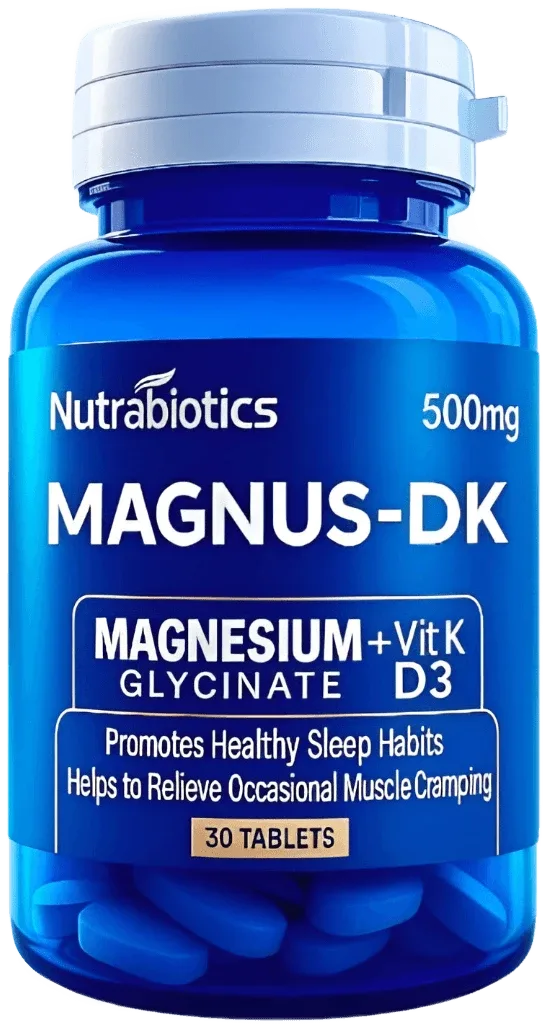
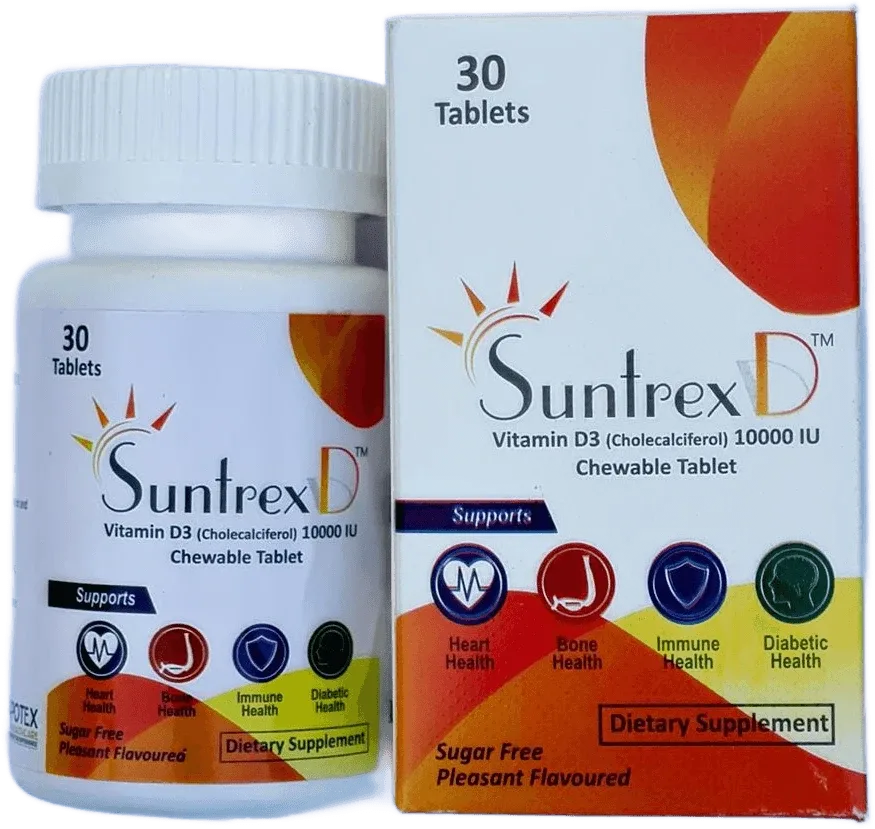
Apotex options. Magnus-DK combines 5,000 IU of vitamin D3 and 100 mcg of vitamin K2 with 500 mg of magnesium glycinate in one tablet. SuntrexD is a 10,000 IU vitamin D3 chewable tablet, usually taken weekly or as a short course on a doctor's advice.
Products in this guide
Cash on delivery across Pakistan, with free delivery on orders over Rs 2,000.
Common questions
Should I take vitamin D3 with K2?
Many people do, because vitamin D3 increases calcium absorption and K2 helps build that calcium into bone. If you take warfarin or another blood thinner, ask your doctor before taking any vitamin K.
Is 5,000 IU of vitamin D3 a day safe?
It is above the 4,000 IU a day the NIH sets as the upper limit for adults without medical supervision. Doctors often use it for a period to correct low levels and then recheck. Take it on a doctor's advice, ideally after a blood test, and do not combine it with other vitamin D products.
What is the best time to take vitamin D3?
With a meal that contains some fat, at a time you will remember every day. Morning or evening both work.
How do I know if my vitamin D is low?
Only a blood test (25-hydroxy vitamin D) can tell you. Tiredness and bone or muscle aches can be signs, but many people with low levels feel fine.
Can I take vitamin D3 and magnesium together?
Yes. They are often taken together, and the body uses magnesium in processing vitamin D. Magnus-DK combines both, with vitamin K2, in one tablet.
More guides
-
 6 min read
Vitamin D Deficiency in Pakistan: Symptoms, Causes, Tests and Treatment
Pakistan's National Nutrition Survey found vitamin D deficiency in nearly 8 out of 10 women and 6 out of 10 young children. Here are the symptoms, why it is so common in such a sunny country, what your test result means, and how it is treated safely.
-
 5 min read
Glutathione for Skin: Benefits, Side Effects and What the Research Really Shows
Glutathione is the antioxidant behind most "whitening" tablets in Pakistan. Here is what the studies actually show, how long it takes, the side effects, why injections are a bad idea, and how to choose capsules safely.
-
 4 min read
Vitamin C Serum: Benefits, How to Use It and How to Choose a Good One
Vitamin C serum is one of the best-studied ingredients for brighter, more even skin. Here is what it can and cannot do, how to use it morning and night, and how to choose one that has not already gone off.