
Magnesium Glycinate in Pakistan: Benefits, Dosage and How to Choose
Magnesium glycinate is the form of magnesium most people choose for sleep, calm and muscle cramps. Here is what it does, how much to take, who should be careful, and how to choose a good one in Pakistan.
By Apotex Healthcare team Updated 5 min read
Magnesium glycinate is magnesium bound to glycine, an amino acid. It is one of the gentlest forms of magnesium on the stomach and it is well absorbed, which is why it is the form most people choose for sleep, relaxation and muscle cramps. This guide explains what it does, how much to take, who should be careful, and how to choose a good one in Pakistan.
What is magnesium glycinate?
Magnesium is a mineral your body uses every day. In a supplement it is always bound to a partner, such as oxide, citrate, chloride or glycine. That partner changes how well the magnesium is absorbed and how it feels in your stomach.
In magnesium glycinate (also sold as magnesium bisglycinate), the partner is glycine, an amino acid your body also makes for itself. This form is usually well tolerated, which makes it a good choice for taking every day.
Why your body needs magnesium
According to the US National Institutes of Health (NIH), magnesium helps more than 300 enzyme systems do their work, including the ones that control muscle and nerve function, blood sugar, blood pressure and protein building. It is also needed to make energy and to build healthy bones.
The NIH recommends these daily amounts for adults, from food and supplements together:
| Age | Men | Women | Pregnancy |
|---|---|---|---|
| 19–30 years | 400 mg | 310 mg | 350 mg |
| 31 years and over | 420 mg | 320 mg | 360 mg |
Diets built mostly on refined flour (maida), white rice, tea and sugary drinks tend to be low in magnesium, because refining removes much of it.
What magnesium glycinate may help with
- Sleep and relaxation. Magnesium supports normal nerve function, and glycine itself has been studied for sleep quality. The research is still limited, but many people take magnesium glycinate in the evening and find it helps them settle.
- Muscle cramps. Results are mixed: some people notice fewer night-time cramps, others do not. It is worth trying if your diet is low in magnesium.
- Tiredness and weakness. These can be early signs of low magnesium. If your intake is low, a supplement helps bring it back up.
- Bones. Magnesium is part of healthy bone, alongside calcium and vitamin D.
Magnesium is not a sleeping pill or a cure. If you have long-term trouble sleeping, constant cramps or ongoing tiredness, see a doctor to find the cause.
Magnesium glycinate vs citrate vs oxide
The NIH notes that magnesium citrate, chloride, lactate and aspartate are absorbed better than magnesium oxide. Glycinate is also generally well absorbed, and it tends to be the gentlest on the stomach.
| Form | Absorption | On the stomach | Often chosen for |
|---|---|---|---|
| Magnesium glycinate | Good | Gentle, rarely loosens stools | Sleep, calm, cramps, daily use |
| Magnesium citrate | Good | Can loosen stools | Constipation, general use |
| Magnesium chloride | Good | Moderate | General use |
| Magnesium oxide | Lower | Often loosens stools | Low-cost tablets, antacids, laxatives |
If you want magnesium for sleep, calm or cramps without a laxative effect, glycinate is usually the best fit.
How much magnesium glycinate to take, and when
Check what the label measures. Some labels give the weight of the whole compound (magnesium glycinate), others give only the magnesium inside it, called elemental magnesium. Magnesium glycinate is roughly 14% magnesium by weight, so the elemental amount is much smaller than the compound weight. If a label is unclear, ask the seller which one it shows.
Stay under the upper limit. The NIH sets 350 mg of elemental magnesium a day as the upper limit from supplements for adults. This does not include magnesium from food. Doctors sometimes advise more for a specific reason.
Pick a time and keep to it. Many people prefer the evening, about an hour before bed. Taking it with food makes it even gentler on the stomach.
Give it a few weeks. Magnesium is not a quick fix. Take it regularly for a few weeks before judging how you feel.
Who should be careful
- Kidney disease. Healthy kidneys remove extra magnesium. If your kidneys do not work well, magnesium can build up, so only take it on your doctor's advice.
- Some antibiotics. Magnesium can stop tetracycline and quinolone antibiotics (such as ciprofloxacin and levofloxacin) from working properly. The NIH advises taking these antibiotics at least 2 hours before, or 4 to 6 hours after, a magnesium supplement.
- Osteoporosis tablets. Magnesium can reduce the absorption of bisphosphonates such as alendronate, so keep the two apart; ask your pharmacist about timing.
- Pregnancy and breastfeeding. Your needs change, so ask your doctor which supplements suit you.
- Too much at once. High doses of magnesium can cause diarrhoea, nausea and stomach cramps. Glycinate is less likely to do this than oxide or citrate.
Magnesium from food
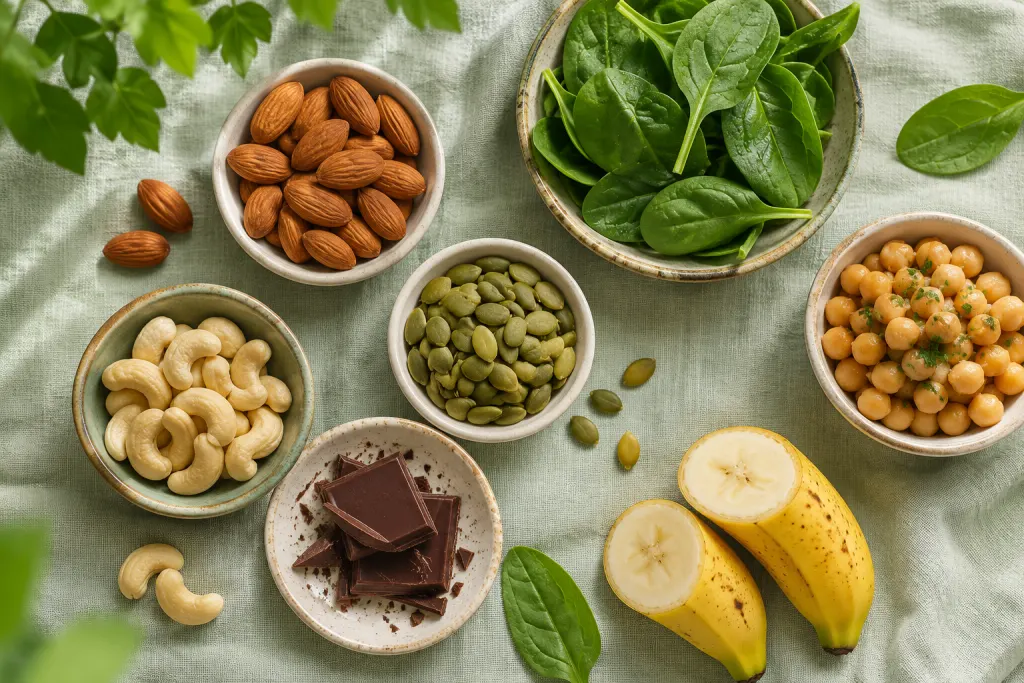
Food comes first. Good sources that are easy to find in Pakistan include:
- Pumpkin seeds, almonds (badam), cashews (kaju) and peanuts
- Spinach (palak) and other leafy greens
- Chickpeas (chana), lentils (daal) and kidney beans (rajma)
- Whole-wheat atta, brown rice and oats
- Bananas, potatoes and plain yoghurt
A supplement helps when your diet falls short, or when a doctor has advised extra magnesium.
How to choose the best magnesium glycinate in Pakistan
- The form is named clearly: "magnesium glycinate" or "bisglycinate", not a vague "magnesium" that may be mostly oxide.
- The amount per tablet is printed, ideally with the elemental magnesium as well.
- You know who makes it: a company name and address on the pack, a batch number and an expiry date.
- It arrives sealed, from the brand or a pharmacy, not as loose strips from unknown sellers.
- The extras are ones you want. Vitamins D3 and K2 are a sensible pairing for bones; skip blends padded with things you do not need.
Where Magnus-DK fits. Magnus-DK from Apotex Healthcare lists 500 mg of magnesium glycinate per tablet, with 5,000 IU of vitamin D3 and 100 mcg of vitamin K2, in a bottle of 30 tablets. Because of the vitamin D in it, it suits people who also want vitamin D. If you already take a vitamin D supplement, check with your doctor first. Our vitamin D3 and K2 guide explains those doses.
The product in this guide
Cash on delivery across Pakistan, with free delivery on orders over Rs 2,000.
- Bestseller
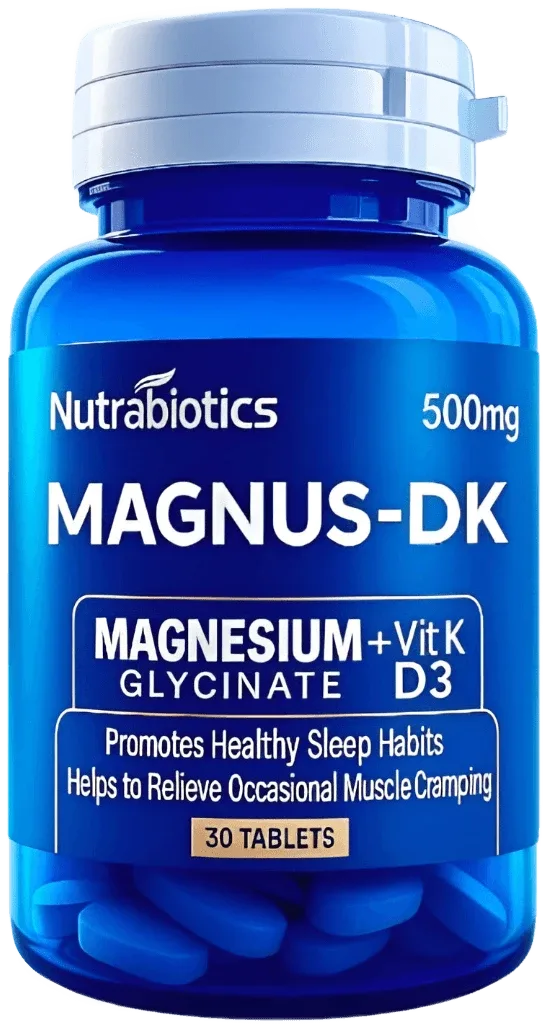
500 mg Magnesium glycinate
Magnus-DK Magnesium Glycinate + Vitamin K2 + Vitamin D3
Rs 1,450 (12)
Common questions
Is magnesium glycinate good for sleep?
Many people find it helps them relax in the evening. Magnesium supports normal nerve function and glycine has been studied for sleep quality, but the research is still limited. It is not a sleeping pill: for ongoing trouble sleeping, see a doctor.
Can I take magnesium glycinate every day?
Yes, it is made for daily use. Keep elemental magnesium from all your supplements under 350 mg a day unless your doctor advises more, and do not take it without medical advice if you have kidney disease.
Is magnesium glycinate or magnesium citrate better for sleep?
Glycinate is usually preferred for sleep and calm because it is gentle on the stomach. Citrate is also well absorbed but tends to loosen stools, which is why it is often used for constipation.
How long does magnesium glycinate take to work?
Some people notice they relax or sleep better within days. If your intake has been low, or you take it for cramps, give it a few weeks of regular use before judging.
Can I take magnesium glycinate with vitamin D?
Yes. They are often taken together, and the body uses magnesium in processing vitamin D. Magnus-DK combines magnesium glycinate with vitamins D3 and K2 in one tablet.
More guides
-
 6 min read
Vitamin D Deficiency in Pakistan: Symptoms, Causes, Tests and Treatment
Pakistan's National Nutrition Survey found vitamin D deficiency in nearly 8 out of 10 women and 6 out of 10 young children. Here are the symptoms, why it is so common in such a sunny country, what your test result means, and how it is treated safely.
-
 5 min read
Glutathione for Skin: Benefits, Side Effects and What the Research Really Shows
Glutathione is the antioxidant behind most "whitening" tablets in Pakistan. Here is what the studies actually show, how long it takes, the side effects, why injections are a bad idea, and how to choose capsules safely.
-
 4 min read
Vitamin C Serum: Benefits, How to Use It and How to Choose a Good One
Vitamin C serum is one of the best-studied ingredients for brighter, more even skin. Here is what it can and cannot do, how to use it morning and night, and how to choose one that has not already gone off.